Direct answer: what does this signal tell us?
Yahoo Finance reports that Eureka Ergonomic has launched a commercial-space business and a new B2B platform. This is a topic signal, not proof of any specific product's performance. For B2B buyers, it reflects a broader trend: sourcing in office furniture and standing desks is moving from plain product catalogs toward platform-enabled channel models aimed at commercial projects. The point worth watching for distributors, office furniture brands, fit-out contractors and enterprise buyers is not one company's move, but the rising weight of platform capability in purchasing decisions.
To be clear: this source does not prove ETUP's product performance, certifications, capacity or lead times. ETUP supplies B2B electric standing desks, desk frames and lifting systems; confirm all commercial details with ETUP before using them in tenders or purchasing decisions.
Why commercial-space channels are becoming platform-driven
Office furniture procurement has long suffered from information asymmetry: project owners need multi-category packages, brands need channel coverage, and distributors need stable supply plus technical support. Platform models attempt to connect inquiry, specification confirmation, sampling and volume delivery in one flow, reducing coordination costs across parties. The trend is especially visible in the US market and is gradually influencing project procurement habits in Europe, the Middle East and Southeast Asia.
For distributors: from selling products to selling deliverable solutions
Commercial clients increasingly care about overall delivery rather than a single desk. Platform-driven channels mean distributors must understand upstream supply capability more clearly, including frame and lifting-system compatibility, batch consistency and the scope of after-sales support. Confirming these details with suppliers reduces project risk more effectively than comparing unit prices alone.
For office furniture brands: greater transparency in OEM/ODM collaboration
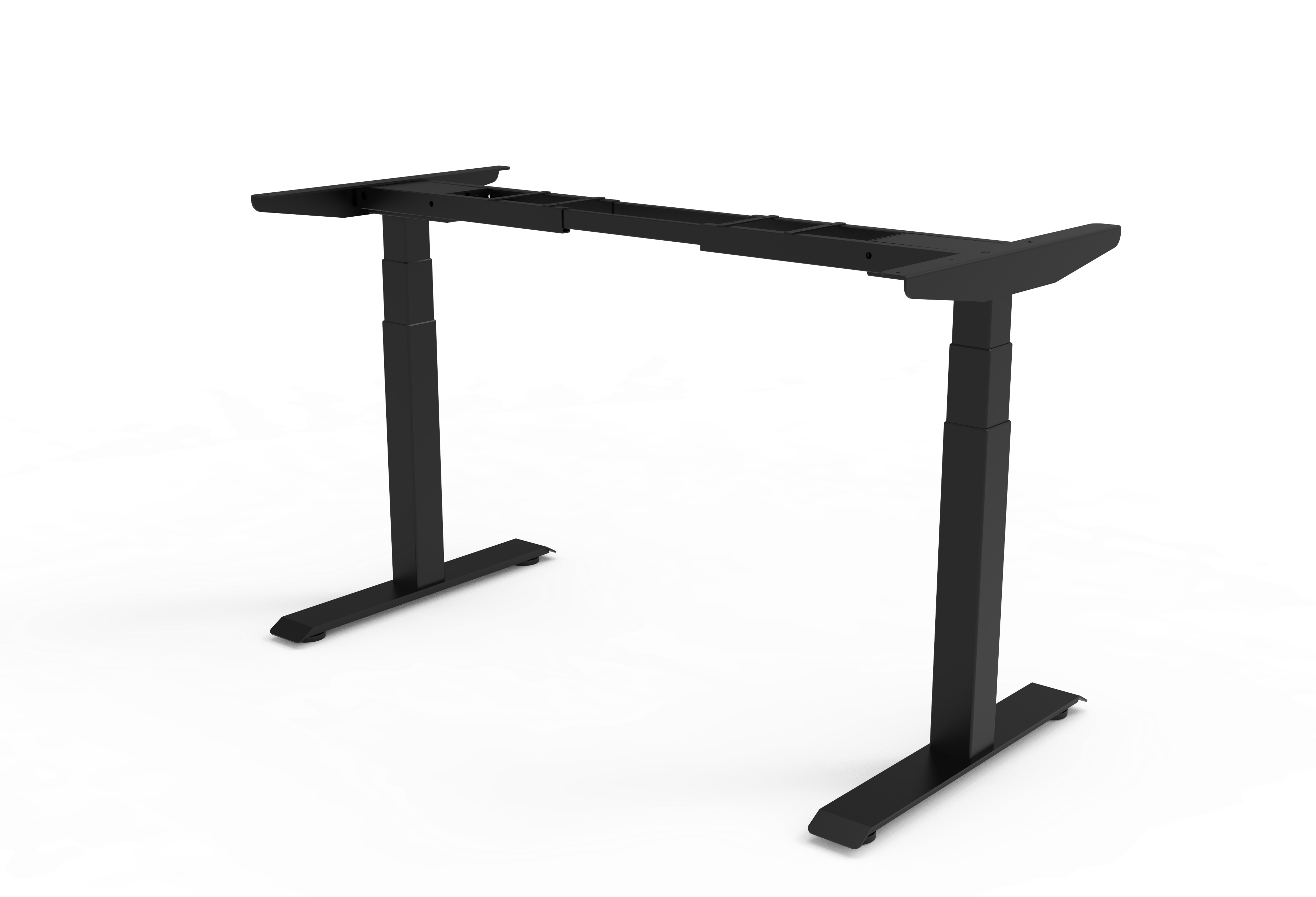
When buyers reach multiple supply sources through a platform, the division of labor between brands and OEM/ODM partners needs to be clearer. Responsibility boundaries for key components such as lifting systems, frame structures and control modules should be defined early. As a B2B supplier of standing desks and lifting systems, ETUP's specific cooperation models and customization scope should be confirmed directly with ETUP.
For fit-out contractors and enterprise buyers: specification confirmation moves earlier
Platform procurement pushes specification confirmation earlier. Contractors need to lock frame dimensions, lifting stroke and control method at the tender stage to avoid change-order costs after winning. Enterprise buyers focus more on batch consistency and future expansion capability.
How buyers should respond
- Treat platforms as an information entry point, not a conclusion. Information shown on a platform should be confirmed directly with the supplier, especially certifications, test reports and warranty terms.
- Separate product signals from commercial signals. Industry news reflects channel trends but does not replace due diligence on a specific supplier.
- Lock key component specifications early. The match between lifting systems and desk frames directly affects project delivery and should be clarified at the inquiry stage.
- Ask for written confirmation. Commercial details such as MOQ, lead time, warranty and customization scope should be based on written supplier responses.
Practical buyer checklist
The checklist below is for distributors, brand procurement teams and fit-out contractors evaluating standing desk and lifting-system suppliers. For any item involving specific figures or commitments, mark it as "contact ETUP to verify."
- Product scope: does the supplier offer electric standing desks, desk frames and lifting systems together?
- Specification fit: is compatibility between frames and lifting systems clearly documented?
- Certifications and testing: are relevant certifications and test reports available? — contact ETUP to verify.
- MOQ and volume policy: what are the minimum order quantity and volume pricing structure? — contact ETUP to verify.
- Lead time and capacity: what are standard lead times and peak capacity? — contact ETUP to verify.
- Warranty and after-sales: what are the warranty period and spare-parts support scope? — contact ETUP to verify.
- OEM/ODM capability: how are customization scope, sampling process and IP ownership defined? — contact ETUP to verify.
- Project support: are installation instructions, technical documentation and a project contact provided?
Regional notes for buyers in Europe, North America, the Middle East and Southeast Asia
Priorities differ by market. European buyers often focus on compliance documents and long-term supply stability; North American buyers value delivery responsiveness and channel support; Middle East projects often involve larger volumes and consolidated deliveries; Southeast Asian markets are more sensitive to price and flexible MOQs. In every market, platform channels are only a starting point, and final decisions should rest on direct verification of supplier capability.
Conclusion
Eureka Ergonomic's launch of a commercial-space business and a new B2B platform is a channel signal worth noting, but it does not prove any supplier's product performance. The right approach for B2B buyers is to use such signals to understand industry direction while verifying specific suppliers with a structured checklist. ETUP supplies B2B electric standing desks, desk frames and lifting systems; to confirm product scope, certifications, MOQ, lead times or warranty, contact ETUP to verify.
Sources
Topic signal source: Yahoo Finance, "Eureka Ergonomic Launches Commercial Space Business and New B2B Platform," published 2026-09-18. Link: original link. This source is used only as a topic signal and does not constitute proof of ETUP product performance.