Direct Answer: How Does the Math Behind Hybrid Work Affect B2B Office Furniture Procurement?
CBRE's recent analysis, "The Math Behind the Hybrid Workplace," highlights that companies are using data to recalculate office space needs: attendance rates, space utilization, and collaboration efficiency all determine desk-to-employee ratios. For B2B office furniture buyers, this means shifting from "one desk per person" to "desks based on actual usage scenarios." Electric standing desks, adjustable desk frames, and lifting systems offer the flexibility and space adaptability needed to optimize the hybrid workplace equation. As a B2B supplier of electric standing desks, desk frames, and lifting systems, ETUP recommends that buyers prioritize adjustable, scalable solutions when planning hybrid offices—and contact ETUP to verify commercial details.
The Math of Hybrid Work: Key Variables and Procurement Implications
CBRE's analysis emphasizes that hybrid workplace planning must balance multiple variables: employee attendance patterns, team collaboration needs, individual focus time, and space costs. These variables directly impact the number, type, and layout of desks. For example, if average attendance is 60%, companies may not need a fixed desk for every employee; instead, they may increase shared workstations and flexible areas. This requires desks that are height-adjustable, easy to move, or reconfigurable.
For buyers, this means:
- Changing desk ratios: Fewer fixed desks, more shared workstations, requiring more height-adjustable desks to accommodate different users.
- Multifunctional spaces: The same area may be used for collaboration, focus, or training; electric standing desks allow quick mode switching.
- Health and efficiency: Sit-stand alternating work is widely considered to help alleviate discomfort from prolonged sitting and improve comfort, though specific effects vary by individual.
The Role of Electric Standing Desks in Hybrid Work
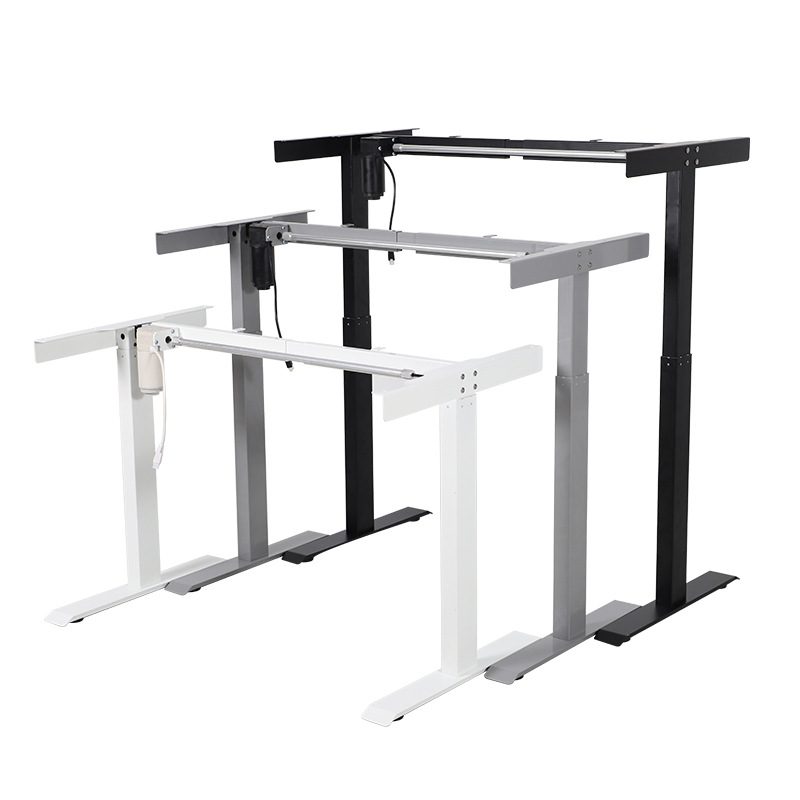
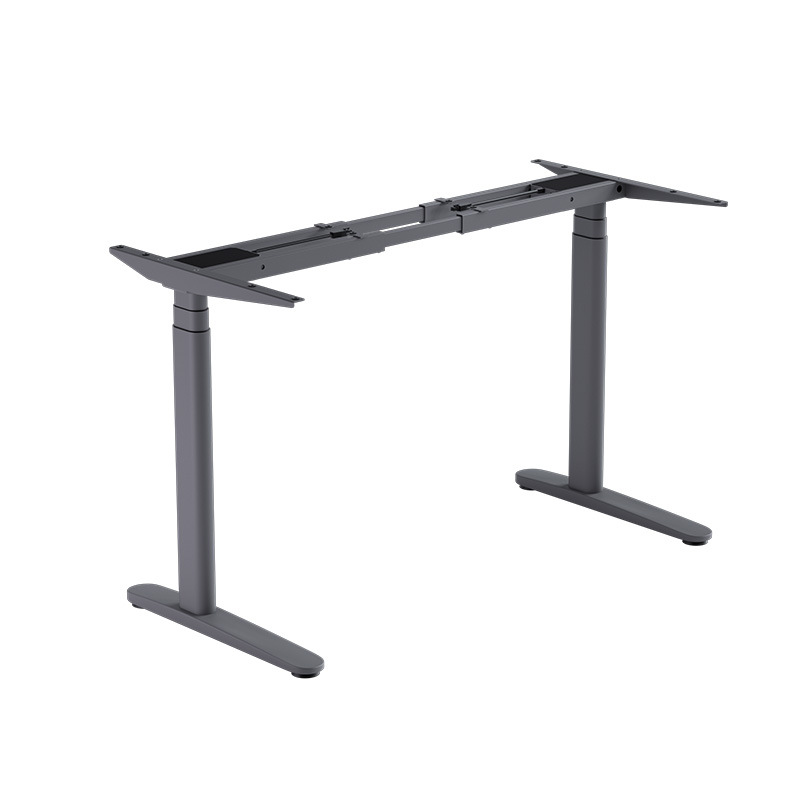
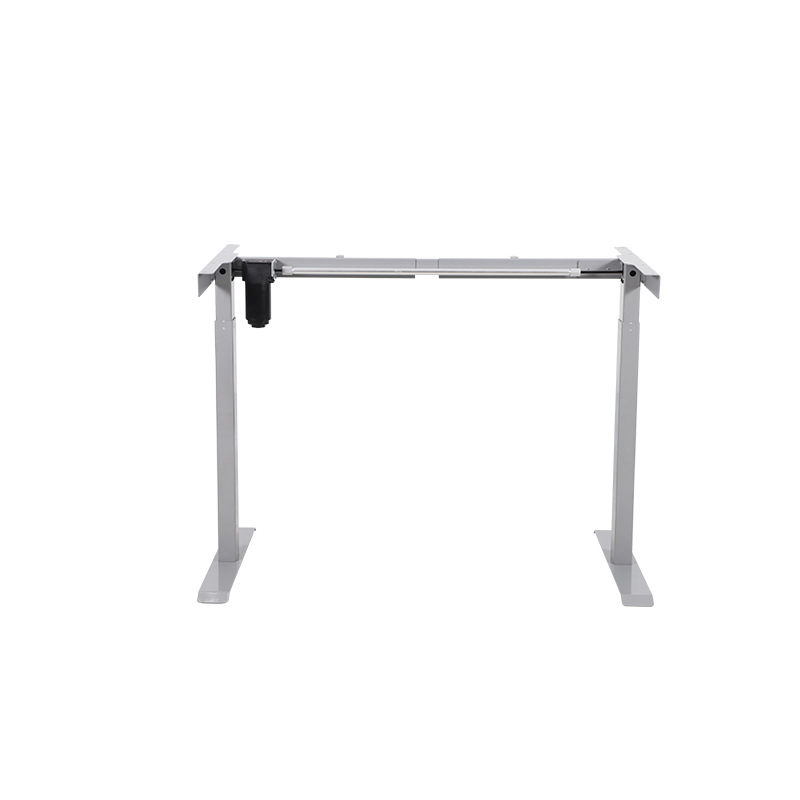
Electric standing desks use motorized drive to adjust height, allowing users to easily switch between sitting and standing. In hybrid scenarios, this flexibility is crucial: shared workstations must adapt to different heights and preferences; multifunctional spaces require quick layout changes; and companies want durable furniture that lasts. ETUP offers electric standing desks, desk frames, and lifting systems designed for B2B customers, meeting the bulk needs of distributors, office furniture brands, fit-out contractors, and enterprises. For specific specifications, certifications, and customization options, please contact ETUP to verify.
Key Considerations for Desk Frames and Lifting Systems
Desk frames and lifting systems are the core components of electric standing desks. When procuring, consider:
- Height range: Does it cover the target user group's height range?
- Load capacity: Does it support daily office equipment (monitors, laptops, etc.)?
- Stability: Does it remain stable at maximum height?
- Motor type and noise: Dual motors are often more stable and faster than single motors, but cost more.
- Control options: Hand controller, memory presets, anti-collision features, etc.
- Compatibility: Does it support OEM/ODM customization to match brand needs?
ETUP offers various desk frame and lifting system options, but specific parameters must be confirmed based on project requirements. Buyers are advised to contact ETUP for detailed technical documentation before selection.
Procurement Checklist: Electric Standing Desks for Hybrid Spaces
The following checklist helps B2B buyers systematically evaluate electric standing desk procurement:
- Define usage scenarios: Shared workstations, fixed desks, collaboration areas, or executive offices?
- Calculate desk ratios: Based on attendance and space utilization, determine the number of desks needed.
- Determine height range: Cover from 5th percentile female to 95th percentile male height.
- Assess load requirements: Consider monitors, laptops, documents, etc.
- Check stability standards: Test stability at maximum height.
- Consider motor and control systems: Dual motors, memory presets, anti-collision, etc.
- Verify compliance and certifications: Confirm required certifications for target markets (e.g., CE, UL, BIFMA) and contact ETUP to verify.
- Evaluate supplier capabilities: Capacity, lead times, customization options, after-sales support—confirm with ETUP.
- Plan installation and maintenance: Is installation guidance provided? What are maintenance costs?
- Total cost of ownership analysis: Look beyond purchase price to durability and maintenance costs.
Regional Market Differences
Different markets have varying acceptance of hybrid work and electric standing desks. Europe emphasizes ergonomics and sustainability; North America focuses on health and efficiency; the Middle East may prioritize premium configurations; Southeast Asia is sensitive to cost-performance. ETUP serves global B2B customers and can provide solutions tailored to regional needs. For specific market strategies and product configurations, please contact ETUP.
Conclusion
CBRE's math behind hybrid work reminds us that office space planning is becoming more data-driven. For B2B office furniture buyers, this means needing more flexible, adjustable solutions such as electric standing desks, desk frames, and lifting systems. As a supplier of these products, ETUP is committed to supporting distributors, brands, and enterprises. Before making procurement decisions, be sure to contact ETUP to verify all commercial details, including certifications, MOQ, lead times, and customization options.
Sources
Topic signal: The Math Behind the Hybrid Workplace - CBRE (published 2024-01-11). This source is used as a topic signal only; it does not prove ETUP product performance.