Direct answer
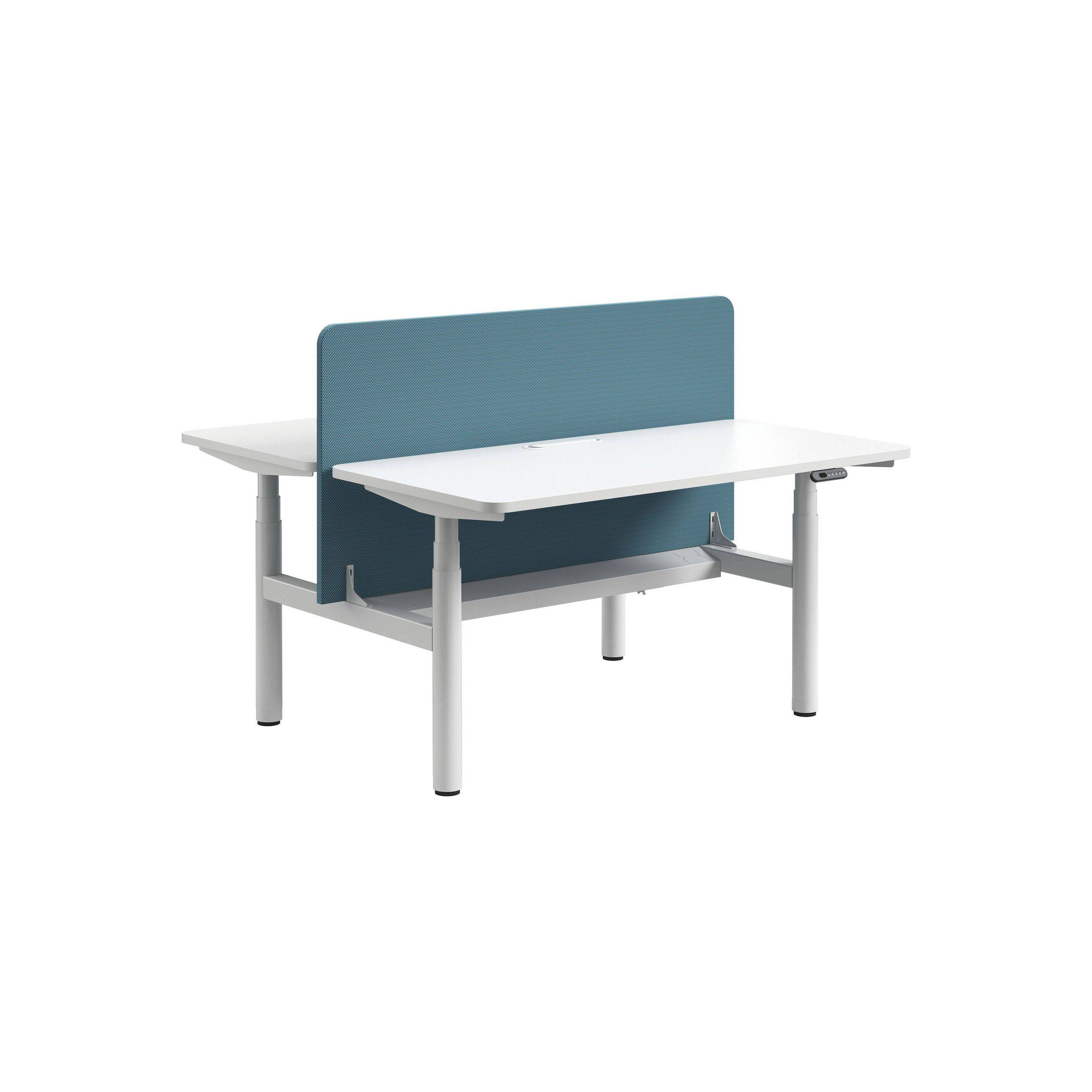
When people can choose where they work, an office no longer sells on 'a desk is available' — it sells on 'this space offers something you cannot get elsewhere.' For buyers of standing desks and lifting systems, that shifts product evaluation away from a single spec sheet and toward spatial adaptability: can one desk frame serve assigned workstations, hot-desking, collaboration zones and temporary project islands? This draft uses an Office Insight article as a topic signal to discuss what that means for B2B supply chains. It makes no claims about ETUP product performance.
What the topic signal says
The Office Insight article discusses connection by design and how coworking spaces create opportunity. Its central observation is that, for many people, where to work is no longer answered by necessity — a desk, Wi-Fi and a laptop can make almost any space a workplace. That changes the role of going into the office: if people have choices, the spaces we design need to offer something they cannot get elsewhere.
It is important to be precise about what this is: a design-led industry observation, not market research data. It does not prove sales, performance or return on investment for any specific product. Its value is as a framework for re-prioritising procurement criteria.
Why this matters for standing desk procurement
Coworking and hybrid-work environments differ structurally from the traditional 'one person, one desk, one fixed height' layout:
- Workstations are no longer personal. The same desk may be used by people of different heights doing different tasks within a single day, raising the importance of ease of adjustment and height memory.
- Spaces reconfigure quickly. Switching between collaboration and focus zones happens more often, making frame mobility, cable management and accessory compatibility genuine evaluation criteria.
- The 'worth showing up for' experience needs visible differentiation. Sit-stand capability is one spatial feature users perceive directly — but it must be stable, quiet and easy to operate, or it becomes a negative experience instead.
- Operators focus on lifecycle cost. Shared spaces typically see higher usage intensity and a greater chance of misuse than assigned desks, so buyers look harder at structural design, control box options and spare-parts availability rather than unit price alone.
What it means for four buyer types
Office furniture brands and OEM/ODM customers
Differentiation is moving from appearance to system capability: how well frames and lifting systems match, how customisable the control solution is, and whether one platform can support several product tiers. Brands should clarify target-market electrical and safety requirements, packaging and installation methods, and spare-parts strategy with suppliers. Contact ETUP to verify certification scope, customisation MOQ and development lead times.
Distributors
Coworking and flexible-office projects are often bought by operators or fit-out main contractors rather than end users. Distributors need to answer 'how does this reduce long-term maintenance headaches?' — which makes supplier documentation quality, installation instructions and spare-parts availability more decisive than a one-off quotation.
Fit-out contractors and designers
Desk layouts, power locations and cable routes decided at design stage directly constrain standing desk selection. The earlier lifting system dimensions, stroke and cable management needs enter the drawings, the fewer late changes. Designers should also treat adjustability as part of the spatial experience, not merely an equipment parameter.
Enterprise buyers
Enterprise buyers usually need consistency across multiple sites. Priorities should be: whether the same model can be supplied over time, how batch-to-batch consistency is assured, and who is responsible when issues arise. These are commercial terms and must be confirmed item by item with ETUP.
Buyer checklist
Use this list in the first technical conversation with a supplier to turn design intent into checkable procurement conditions:
- Define the use case: assigned desks, hot-desking, collaboration zones or a mix? Each has different adjustment frequency and control requirements.
- Define the user range: what height span and weight limit must be covered? Are height memory or multi-user presets needed?
- Structure and stroke: required lifting stroke, frame size range and load specification — confirm in writing with the supplier.
- Control solution: handset type and whether features such as anti-collision or child lock are included; confirm per model configuration.
- Electrical and compliance: voltage, plug type and certification documents required for the target market. Ask for valid market-specific documents and verify coverage with ETUP.
- Cable management: compatibility of cable trays, routing channels and under-desk power.
- Installation and packaging: flat-pack availability, instruction languages and on-site assembly time.
- Spare parts and after-sales: wear-part list, spare-parts lead time and warranty terms — all in writing.
- Samples and validation: sample lead time, test items and acceptance criteria.
- Commercial terms: MOQ, lead time, capacity and payment terms — contact ETUP to verify.
Editorial note
This is a draft for human review and must not be treated as published content. It contains no verified ETUP product performance, certification, customer or market data; all commercial details must be confirmed with ETUP before publication.
Sources
Topic signal: Office Insight, Connection by Design and Creating Opportunity in a Coworking Space (published 2026-09-21). Cited as a topic signal only; it does not constitute proof of any ETUP product performance.